A boarding stable or training barn needs books that answer three questions every month: what one horse costs to keep, which boarders are paid up, and whether the operation is being run to make a profit. The third question is the one the CRA cares about, and the records that answer it are built month by month, not at tax time.
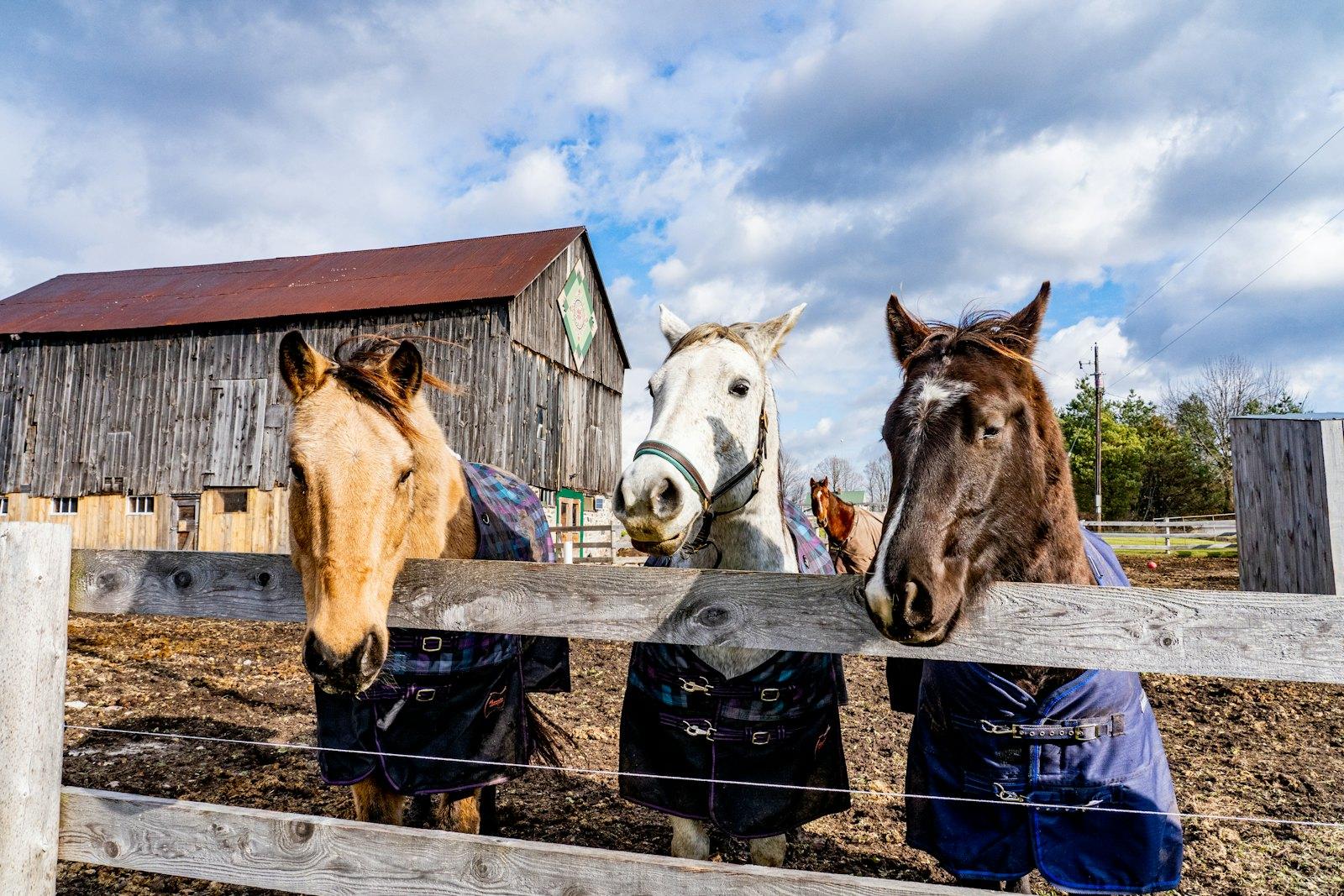
The Township of Langley has more horses than anywhere else in British Columbia and calls itself the province's horse capital. Many of those horses live on mixed properties where a family keeps its own animals next to boarders, lesson horses, or a small breeding program. The bookkeeping has to keep those threads apart.
How do you work out the cost of keeping one horse?
Add up a month's direct costs and overhead for the barn, then divide by the number of stall-months used. That gives you a cost per stall to set against your board rate. It is simple arithmetic; the hard part is getting clean numbers into it.
Direct costs are the things a horse eats, stands on, or needs done: hay, grain, bedding, barn labour, and routine farrier and vet work the barn covers. Overhead is everything that keeps the place running: arena footing, water and power, insurance, property tax, equipment repairs, and interest on the barn loan.
Say a 20-stall barn spends $9,000 a month on hay, bedding, and barn labour, and another $5,000 on overhead. With all 20 stalls full, that is $700 a stall before the owner pays themselves anything. If full board is priced below that, every new boarder adds to the loss. The figures here are illustrative; yours come from your own books.
To make this work, set up classes or tracking categories for each part of the operation:
- Boarding
- Training and lessons
- Breeding and horse sales
- Family horses (kept out of the business results)
Hay is the biggest shared cost and the easiest to misallocate. If boarders' horses, school horses, and your own horses all eat from the same loft, split the hay bill by head count or stall-days each month. The split does not have to be perfect. It has to be consistent and written down.
How should board income be invoiced and tracked?
Issue an invoice for every horse every month, from the accounting system, on the same day. Cash in an envelope and e-transfers with no reference make it impossible to tell who is behind until it is too late to ask politely.
Set up products or items for each kind of charge: full board, partial board, training rides, lessons, and add-ons such as blanketing, extra turnout, supplements, or holding for the farrier. Each item gets a tax code once, so the invoices are right every month without anyone thinking about it.
Two arrangements need special care. When a boarder works off part of their board, record the full board charge and the value of the work, not just the cash difference. Ask your CPA whether that arrangement needs to run through payroll. When an owner supplies their own feed or pays the vet directly, note it on the board agreement so the cost per horse is not overstated for that stall.
Run a receivables aging report at every month-end. A boarder who is 60 days behind is a conversation; one who is 120 days behind is a write-off.
Is a boarding stable a farm or a hobby in the CRA’s eyes?
That is two questions, and both are tax questions for your CPA. The first is whether the activity is farming at all. The second is whether it is run as a business or as a personal pursuit. Here is what the CRA publishes on each.
On the first question, the CRA's Income Tax Folio S4-F11-C1 says farming includes raising or exhibiting livestock and maintaining horses for racing. The same folio lists, among the activities farming does not include, "certain equine services such as horse riding lessons, dressage training, horse boarding, or quarantine service." Breeding and raising horses for sale may sit on one side of that line and boarding on the other.
The folio also says some small non-farm activities can be treated as part of a farming business if they are related to the farming, small in scale, and incidental to the farm's revenue. Whether a barn's boarding and breeding are one business or two is described as a question of fact. That is exactly the conversation to have with your CPA, and it is easier when the books already show each activity's income and costs separately.
On the second question, the folio asks whether the activity is undertaken in pursuit of profit. Where there is a personal element, as there often is with horses, the test is whether it is carried on in a sufficiently commercial manner. The CRA lists these factors:
- Gross revenue and the income or losses in past years
- The extent and type of activity compared with similar businesses of the same kind, size, and location
- Time spent on the operation compared with time spent in a job or other work
- How the operation has developed and the plans to expand, based on the capital invested in buildings, equipment, and stock
None of these is decided by bookkeeping. But every one of them is easier to show when the bookkeeping is good.
How much of a horse-farm loss can you deduct?
That depends on where the CRA places the operation. If farming is your main source of income, a farm loss can be deducted in full against other income. If the farm is a business but not your main source of income, the restricted farm loss rules cap the deduction at $17,500 a year for tax years ending after March 20, 2013. If the activity is not run as a business, no part of the loss is deductible.
Under the restricted rules, you can deduct the full first $2,500 of the loss plus half of the next $30,000. The unused part becomes a restricted farm loss. It can be carried back three years or forward 20 years, and it can only be applied against farming income.
How these rules apply to a property that mixes boarding, training, and breeding is not something to guess at. Bring your CPA a year of books split by activity and let them work it through.
What records support the claim that the barn is a business?
The records that help most are the ones a commercial barn would keep anyway. If an outsider reading your files would conclude you run a business, you have most of what you need.
- A separate bank account and credit card for the barn, used for nothing else
- Written board, training, and lease agreements, signed and dated
- Monthly invoices for every horse and a receivables aging report
- Supplier bills and receipts, coded to the right activity
- A monthly profit and loss by activity, and a budget to compare it against
- A written plan for the next few years, revisited when things change
- Breeding, registration, and sale records for horses you raise
- Records of capital spent on barns, arenas, fencing, and equipment
- Notes on the hours you spend on the operation
Keep these for six years from the end of the last tax year they relate to. The CRA's general rule applies to barns like any other business.
The family's own horses deserve one more word. Their feed, vet, and farrier bills should be paid from a personal account, or coded to an owner's draw if they must go through the business account. Folding them into the barn's expenses makes the business look worse than it is, which is the opposite of what you want.
Do you charge GST and PST at a boarding barn?
For GST, start with what the CRA says about horses themselves. Its farm guidance lists livestock not normally raised as food, such as horses, mules, and mink, as taxable, so a horse sale is not zero-rated the way a sale of beef cattle is. Board, training, and lessons are services. GST applies to most goods and services in Canada, and board is not among the zero-rated farm supplies in the CRA's guide. Before you set up your invoice templates, have your CPA confirm how each of your fees is treated.
If your taxable sales stay at or under $30,000 over four consecutive calendar quarters, you are a small supplier and do not have to register, though you can choose to. Once you pass the threshold, you register and start charging.
For BC PST, Bulletin PST 101 is direct about horses. Equestrian horses, racehorses, saddles, bridles, currycombs, and hoof picks are listed as taxable. Feed and hay for horses that are not used in cultivating land or in producing food, wool, or other products, such as equestrian horses, are taxable too. Horses bought by riding stables for pleasure use, such as trail rides, are not used for a farm purpose and are taxable.
The farmer exemption covers horses other than racehorses and equestrian horses when a qualifying farmer uses them for a farm purpose, along with listed items such as fencing, livestock stalls, and rubber stall mats used solely for farming. Whether a boarding or lesson barn's use of those items counts as a farm purpose is not something to assume. Ask your CPA or the province's PST line before you hand a supplier an exemption certificate. Our post on GST and PST for Langley businesses covers registration and filing in more detail.
What does a monthly close look like for a barn?
You send the month's board list, lesson and training sessions, and supplier bills. We issue or reconcile the invoices, post costs to the right activity, split shared bills, follow up on late board, and close the month by the 10th. You get a profit and loss by activity and a cost per stall to set against your rates.
That is the routine behind our monthly bookkeeping for Langley equestrian businesses. At year-end, year-end preparation hands your CPA the split books they need to answer the farm and hobby questions properly. For the wider picture on farm records and PST, read our guide to bookkeeping for BC farms.
Questions owners ask
Does horse boarding count as farming for tax purposes?
The CRA's folio on the meaning of farming lists horse boarding, riding lessons, and dressage training among equine services it does not consider farming. Raising or exhibiting livestock and maintaining racehorses are within the definition. How that applies to a mixed operation is a question for your CPA.
Do I charge GST on monthly board?
GST applies to most goods and services in Canada, and board does not appear among the zero-rated farm supplies in the CRA's guidance. Confirm the treatment of board, training, and lessons with your CPA before you set up invoices. If your taxable sales stay at or under $30,000 over four consecutive calendar quarters, you do not have to register.
Is hay for boarders’ horses exempt from PST?
Generally not. Bulletin PST 101 says feed and hay for horses that are not used in cultivating land or in providing food, wool, or other products, such as equestrian horses, are taxable. The farm feed exemption is for animals kept for a farm purpose.
Should my family’s own horses be in the business books?
They can sit on the same property, but their costs should be tracked separately and kept out of the business results. Mixing them makes the business look less profitable than it is and weakens the records that show it is run commercially.
How much of a barn loss can I deduct against my salary?
It depends on how the CRA sees the operation. A farming business that is not your main source of income can deduct at most $17,500 of a farm loss a year against other income. An activity that is not run as a business gets no deduction. Your CPA decides which applies.